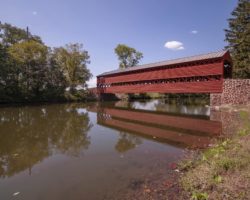

There are a lot of great spots to check out along the Lancaster County shores of the Susquehanna River, but Wind Cave has to be one of my personal favorites.
Wind Cave is a tectonic cave that can be found just south of Pequea in the Clark Nature Reserve. Unlike other caves in Pennsylvania, Wind Cave is open for exploration on your own without need for a ticket or permission.
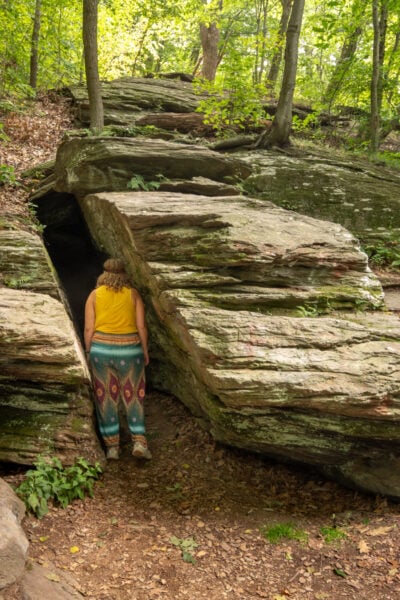
Of course, that also makes it a potentially dangerous place to visit.
I’m going to say right up front that you absolutely should not visit alone and need to be very cognizant of your ability levels. While it is certainly somewhere that most can explore in a limited capacity, it’s not an easy spot once you get deep into the cave, and there are definitely spots where you could get stuck or lost underground.
Do not visit without at least one other person, two strong flashlights (in case one dies), and a map of the cave. Hiking boots, a helmet, and a jacket (as well as clothes that can get dirty) are also recommended.
With that disclaimer out of the way, let’s dig into everything you need to know to visit the Wind Cave in Lancaster County!
The Story of Wind Cave
Despite its popularity, I could find absolutely no information about the history of Wind Cave, which is quite surprising to me. So, if you know its history, please comment at the bottom of this article.
What I do know is that Wind Cave is said to be the largest tectonic cave in the eastern United States and has over 2,000 feet of known passages. That being said, a fair bit of this is difficult to access, so most visitors will only see a few hundred feet of the cave at most.
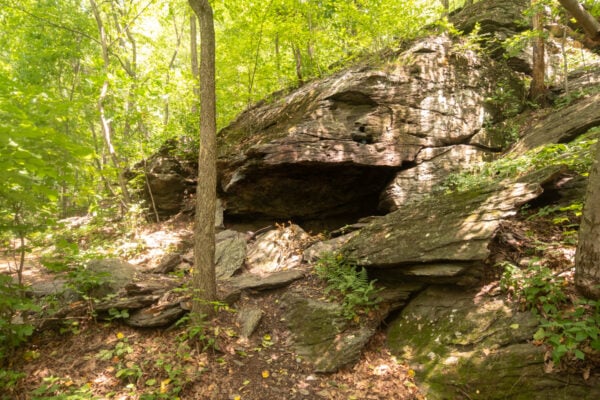
Unlike the well-known show caves in PA, like Penn’s Cave and Black-Coffey Caverns, which are solutional caves created by dripping water, Wind Cave is a tectonic cave that was actually created by cracks in the bedrock when the Susquehanna River Gorge was forming.
This means that there are no stalagmites and other caves features that you’ll find elsewhere. It also means the the walls are rough, though some have been smoothed by visitors over the years.
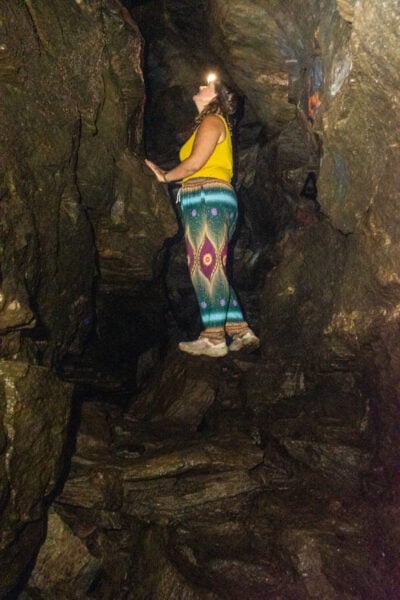
So, even if you’ve visited other caves in PA, this is a unique spot that’s worth checking out.
Wind Cave is also quite cold compared to other caves in PA, which is why it’s also called Cold Cave. In fact, the temperature inside is below 40 degrees (Other PA caves are typically in the 50s), so you’ll likely want to bring a sweatshirt with you even in the middle of the summer.
The cave’s name comes from the fact that there is typically a noticeable breeze when walking into the cave.
How to Get to Wind Cave
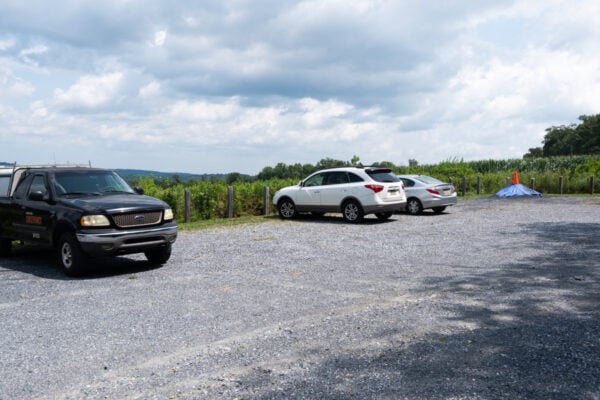
As noted at the top of this post, Wind Cave is located just south of Pequea in Lancaster County near the Susquehanna River. It is within the Clark Nature Preserve, a 373-acre park that is owned by the Lancaster Conservancy and features several miles of great hiking trails and a few nice vistas.
The best way to reach Wind Cave is to start in the parking lot for the Clark Nature Preserve, which can be found at the following coordinates at the end of House Rock Road: 39.874791, -76.364028. See a map here.
[Click here for information on how to use coordinates to find your destination.]
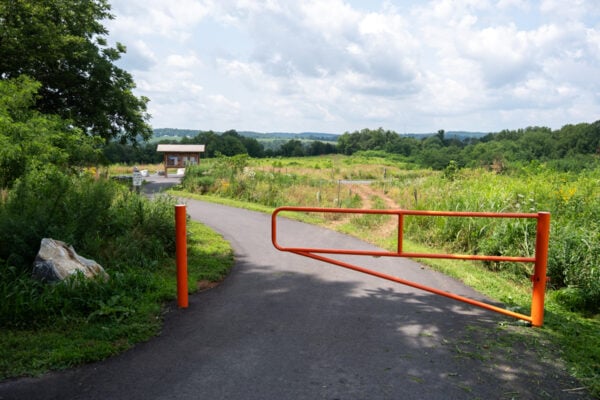
You could also use this address, which is for a private home, and just continue following the road a short distance until it ends at the parking area: 370 House Rock Rd, Pequea, PA 17565.
From the parking area, it is a little over a half-mile downhill walk to the entrance to Wind Cave. You can find a map of the preserve here with Wind Cave noted on it.
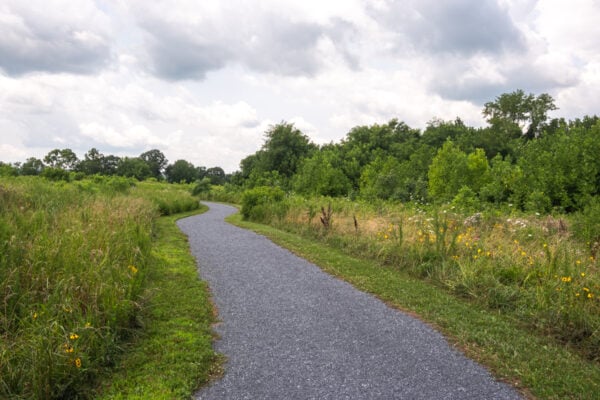
Start by walking past the gate at the end of the parking lot and following the Lloyd Clark Universal Access Trail to the right as it curves downhill.
After four-tenths of a mile, take the Upper Connector Trail to your right as it heads steeply down to the Conestoga Trail.
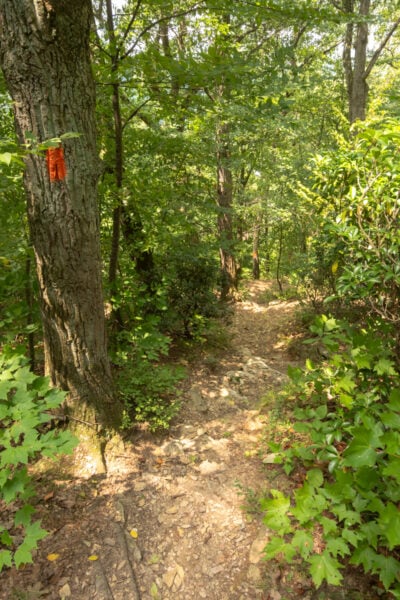
Turn right on the Conestoga Trail and follow it steeply downhill around the rock outcropping until you come to the entrance to Wind Cave. The trail can be a bit tricky to follow here, but you should be able to find your way without too much trouble.
You also can approach Wind Cave from the 60-mile Conestoga Trail, but note that parking where this trail crosses nearby roads is limited if not totally blocked off. Because of that, I only recommend coming this way if you’re doing a much longer hike.
Exploring Wind Cave
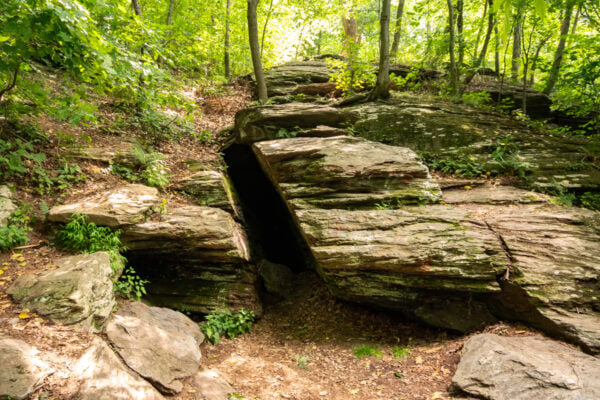
The entrance to Wind Cave is tall and narrow. It’s not very hard to understand that this is a tectonic cave when looking at it. You’ll also undoubtably feel the rush of the cold wind leaving the cave.
I want to reiterate at this point that exploring Wind Cave can be dangerous and not something you should take lightly. Make sure you have proper gear, are visiting with another person, and have saved a copy of the cave map onto your phone before entering.
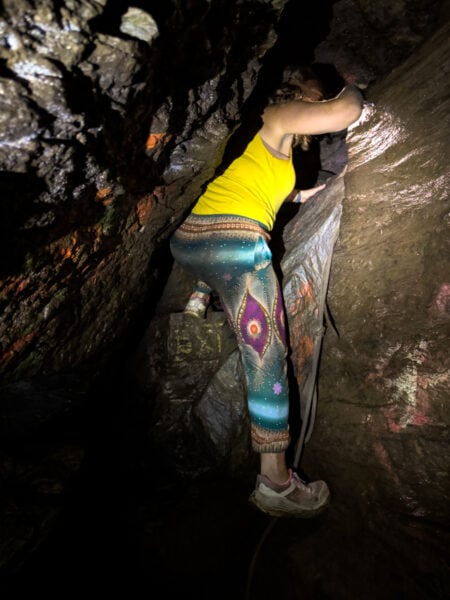
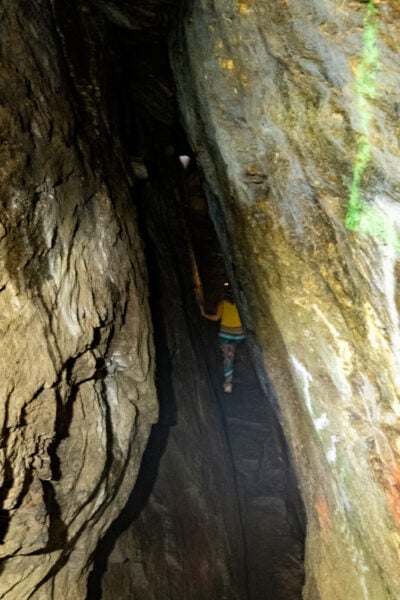
It’s also worth noting that the inside of the cave is quite narrow. I made the mistake of trying to carry my camera backpack into the cave and quickly discovered the passages were too tight to maneuver comfortably with it. I opted to carry my camera and leave my bag outside of the cave, but I don’t know how safe that is.
As you enter Wind Cave, the passage way slopes downward and continues to be about two feet in width for the first 75 feet or so. You’ll also come across the first of the graffiti that lines some of the walls of the cave. Not sure why people feel the need to do that, but it is present in some places throughout the cave.
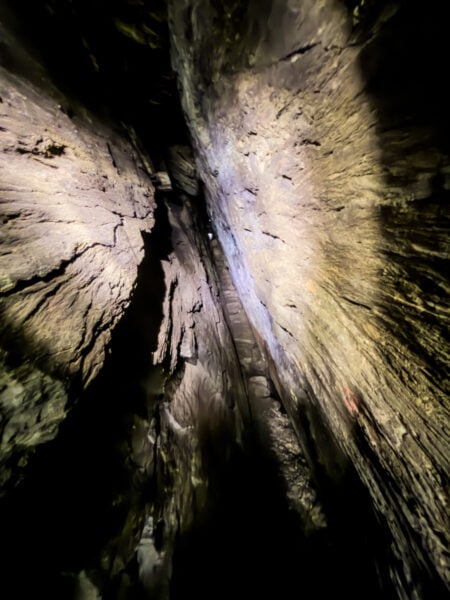
At this point, the cave width gets a bit wider and, to your right, you should be able to see a smallish passage way that leads over to the other branch of Wind Cave. I made note of that, but continued exploring the main passage first.
The passage continues back several hundred more feet, but exactly how far you can go depends on your size, determination, and skill level. There are several spots where you’ll have to climb over or under obstacles to continue. Remember, you have to come back this way, so don’t exceed your ability level as you explore.
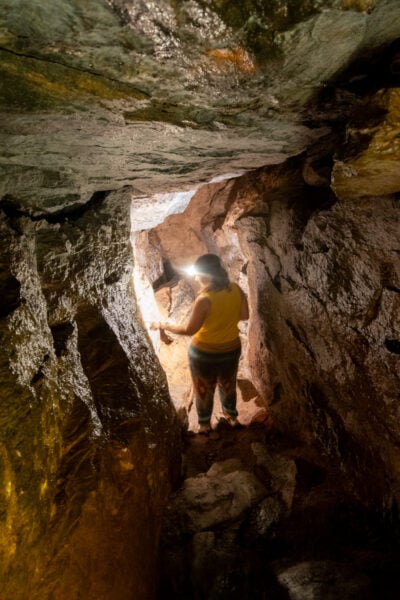
Eventually, you’ll want to turn around and retrace your steps back to the entrance to the other passageway.
The tunnel to it is only about 4 feet tall and three feet wide, so those that get claustrophobic might not like it, but it’s not overly difficult to traverse, though it can be a bit slippery. There is a drop at the far end, so make sure to use caution at this point so you don’t have a small fall.
The second section of Wild Cave contains a good deal more passageway than the first part, though getting between areas is a bit trickier.
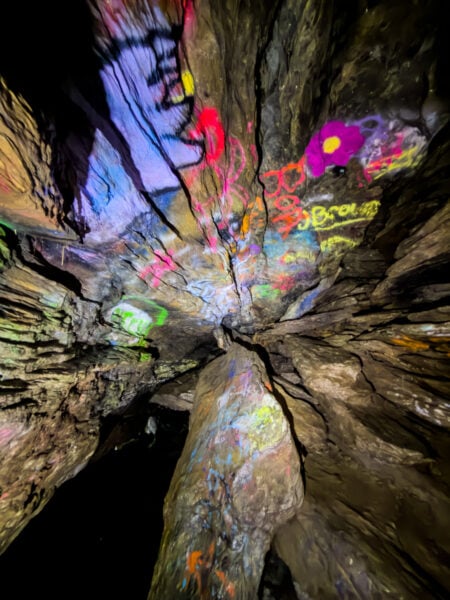
If you head to the left, you’ll soon come to one of the larger rooms in the cave, and the largest room that is easy to access. Sadly, the walls here are filled with graffiti, but it’s still a cool spot to explore.
Beyond here, there are more passageways and rooms, but they are a bit trickier to access, so my wife and I decided it wasn’t worth going any further. As I said before, this is definitely a place where you want to know your limits and not take unnececssary risks.
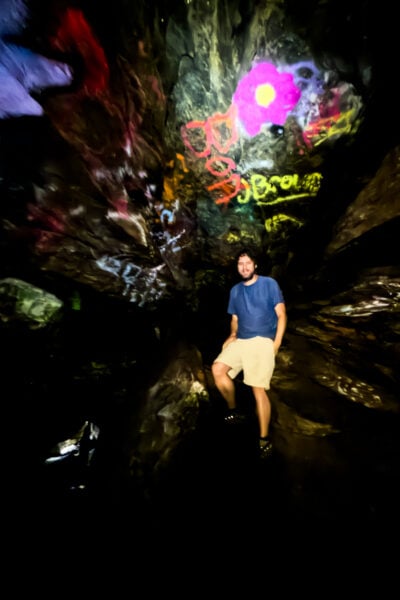
Regardless of where you finish your journey, simply retrace your steps to to main entrance to exit. There are a few smaller exists that you might be able to find depending on how far you explore, but the main entrance is definitely the easiest to find and the largest.
To return to your car, retrace your steps or consider following the preserve’s other trails to some cool overlooks.
Overall, Wind Cave was a ton of fun for both my wife and I to explore, and being able to check it out on your own really does give you a great sense of exploration. However, just note that there aren’t any formations here, which does make the cave itself less beautiful than other caves (like Tytoona Cave a few hours to the west where you can explore on your own, with a free permit, and enjoy formations).
However, for those that have the ability and interest to explore this spot, it’s definitely somewhere you won’t want to miss in Lancaster County.
If you’d rather explore a more traditional cave with a guide and fewer hazards, consider nearby spots like Crystal Cave and Indian Echo Caverns.
And looking for even more places to visit nearby? Check out Sickman’s Mill, Chickies Rock, Mill Creek Falls, and the covered bridges of Lancaster County.
 "